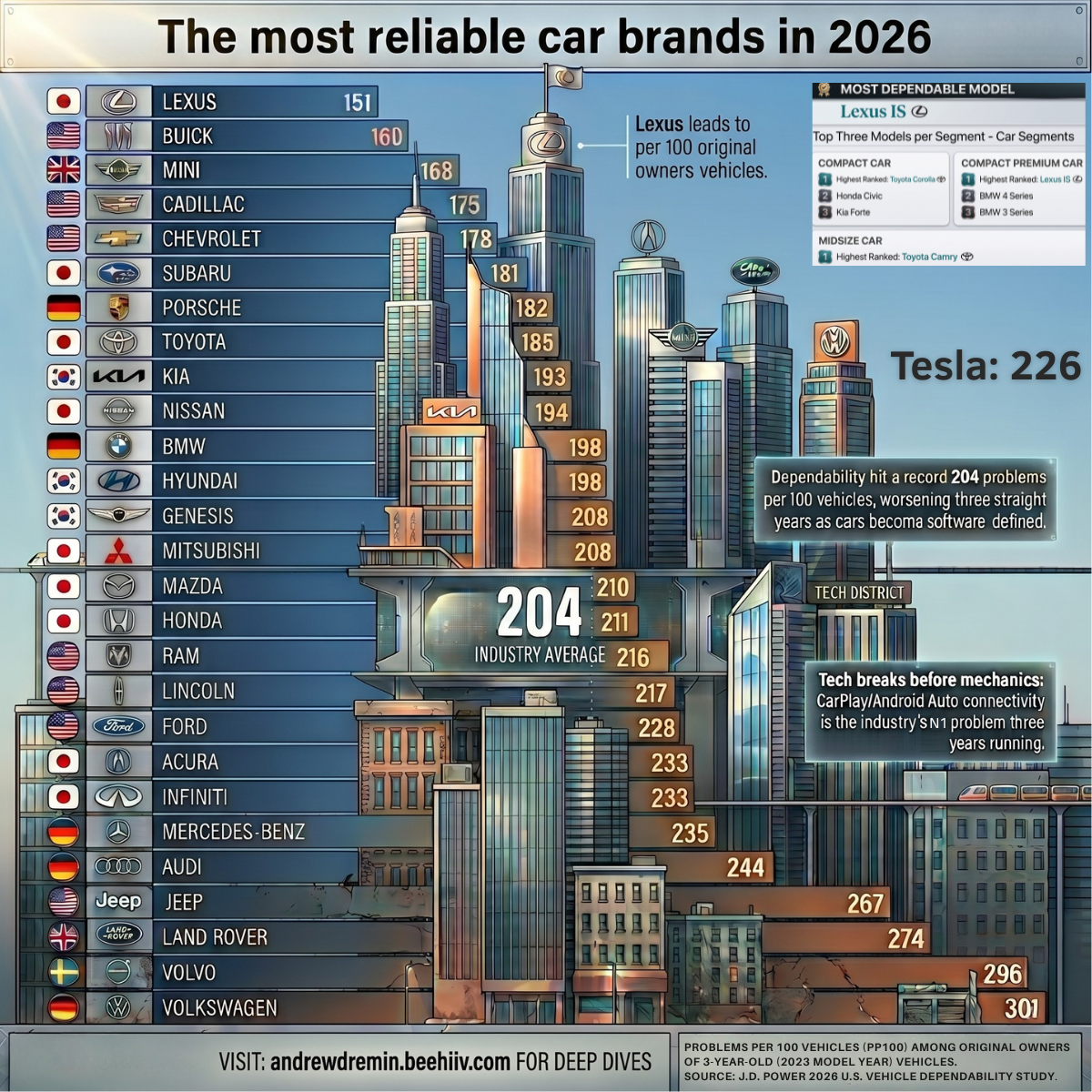
The 2026 J.D. Power Vehicle Dependability Study exposes a massive failure in modern product development. The numbers are clean, clear, and damning.
First, 58% of car owners state that over-the-air (OTA) software updates gave them absolutely zero benefit. Second, these same updates caused a 14% spike in vehicle problems. Finally, for three consecutive years, smartphone integration – the basic act of connecting a phone to a car to play music or use a map – has been the number one consumer complaint.
This is what happens when you let software engineers run a hardware business. Car reliability is dropping because of systematic over-engineering. Premium cars, packed with complex code and massive touchscreens, are now less reliable than basic, mass-market vehicles. Legacy automakers are killing stable, mechanical systems that worked for decades, replacing them with buggy digital interfaces, and calling it progress. It isn’t progress. It is bad engineering masked as innovation.
The exact same rot is spreading through retail and FMCG.
The Software-Defined Illusion
Automakers started treating cars like smartphones. They adopted the Silicon Valley mentality: ship a Minimum Viable Product (MVP) and fix the bugs later via software patches. If the braking system or steering logic is tied to an ecosystem that updates while the owner is asleep, you open the door to systemic failure. A 14% increase in vehicle defects post-update proves that these companies are using their customers as unpaid beta testers.
They do this to chase new revenue streams. They want to sell heated seats on a monthly subscription or lock users into proprietary navigation systems. To do that, they have to eliminate physical buttons and force everything onto a screen. But when a driver has to look away from the road and dig through three sub-menus just to adjust the air conditioning, the design has failed. The technology has created friction where none existed.
How Retail Mirrors the Auto Failure
Retail executives are falling into the exact same trap. They watch tech companies scale, get insecure about their own traditional margins, and start buying shiny tools to impress board members and shareholders. They invest millions into Electronic Shelf Labels (ESLs), AI-driven store layouts, and complex dynamic pricing algorithms.
Walk into the actual stores. The frontend looks high-tech. The ESLs flash with real-time price updates dictated by an algorithm at headquarters. The retailer’s official app tells the customer that a product is in stock. But when the customer reaches the aisle, the physical shelf is completely bare.
A high-definition screen cannot move a pallet from the backroom to the floor. An algorithm cannot fix a broken supply chain or cover for an understaffed shift. This is the reality of phantom inventory – where software claims a product exists because the system forgot to account for theft, spoilage, or misplacement. When you layer expensive frontend tech over broken operational basics, you do not solve problems. You just digitize incompetence.
The Friction Factory
The human cost of this tech obsession is a degraded user experience.
In a car, a buyer spends hard-earned money on a premium product. They want to get in, start the engine, play their music, and drive. Instead, the phone integration crashes, the screen freezes, and they are stuck dealing with a digital glitch at 120 km/h.
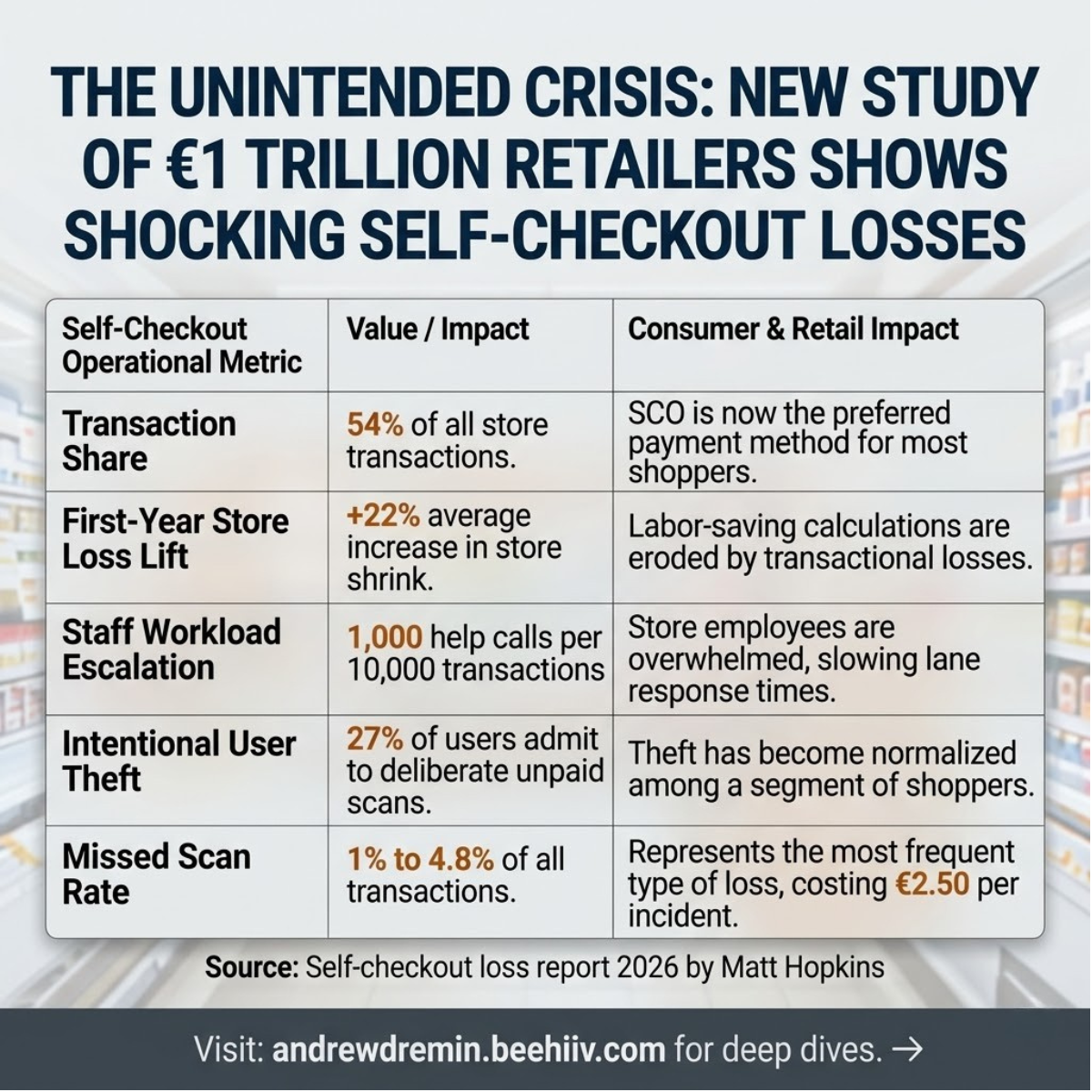
In a supermarket, a shopper wants to grab a loaf of bread, pay, and get out. Instead, they are forced into a “smart” self-checkout lane. The machine barks errors at them, locks up because of a weight discrepancy in the bagging area, and forces them to wait for a stressed employee to scan a badge. The retailer has successfully transferred the labor of checkout to the customer, but failed to make the process efficient. Every error message, every extra screen tap, and every second spent waiting for an override is a failure of operational design.
The Root Cause: Misaligned Metrics
Why do smart executives buy into this hype? Because they are measuring the wrong things.
Tech vendors sell software based on vanity metrics: “increased digital engagement,” “data harvest potential,” or “dynamic margin optimization.” These sound great in a PowerPoint presentation. They look modern. But they ignore the primary law of commerce: eliminate friction for the buyer.
If a technology adds even a single second of delay to a customer’s routine, it is a bad investment. Consumers do not loyalty-shop because a store has digital tags; they shop there because the item they want is on the shelf and they can buy it without hassle.
Cut the Hype: The Operational Blueprint
If you manage a retail network or an FMCG brand, stop looking at what Silicon Valley is doing. Look at your floor. Run your business on hard utility, not digital novelty.
- Audit for Friction: Walk your stores as a customer. Count the seconds it takes to find an item, verify the price, and pass through the checkout. If a digital tool introduces a menu, a delay, or an error state, kill it.
- Fix the Backend First: Shift capital away from customer-facing screens and put it into inventory accuracy, logistics, and supply chain visibility. Technology should be used to ensure the right product lands on the right shelf at the right time.
- Keep Tech Invisible: The best technology is the one the customer never notices. It works silently in the background to streamline logistics, optimize warehouse picking, or automate ordering. If the customer has to consciously interact with your technology to complete a basic transaction, you have probably over-engineered the solution.
The data from the automotive industry is a warning. When you prioritize software over substance, your product reliability drops and your customers lose patience. Stop buying shiny tools to fix deep operational wounds. Fix your basics first.




Leave a Reply