
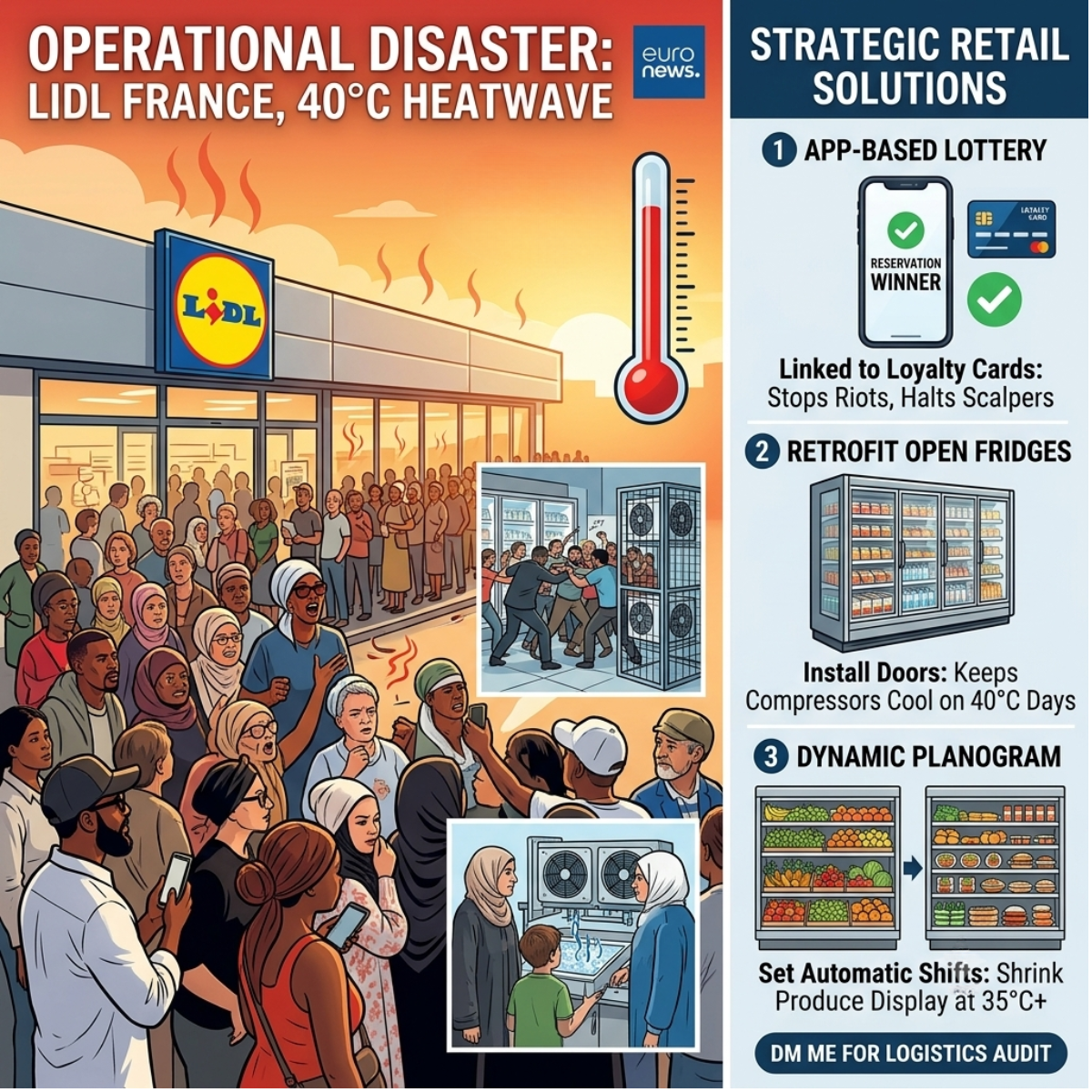
It sounds like a massive commercial win. But let’s be honest: it was a dangerous operational disaster. Retailers are using extreme climate panic as a cheap promotional trick, and it is backfiring on the shop floor, highlighting the severe retail heatwave challenges they face.
Spain’s food safety agency (AESAN) warns that ready-to-eat meals must be kept strictly below 4°C. Professor Antonio Valero from the University of Córdoba warns that leaving these meals at room temperature (above 30°C) for more than two hours drastically increases the risk of Listeria and Salmonella. If your retail cold chain drops for even an hour, you are selling a public health hazard, underscoring the critical importance of cold chain integrity.
Look at Spain. Temperatures hit 42°C this weekend. Consumers are refusing to turn on their kitchen stoves. They want fast, cold convenience, driving a significant ready-to-eat demand. Ready-to-eat meals (platos preparados) are up 20%. The packaged gazpacho and salmorejo market is huge- Spaniards spend €218 million on it annually- and sales spike by 50% during these heat waves.
The Double-Glazed Retrofit Open-front multideck display cases are the worst design for a heatwave. They spill cold air constantly. You need to retrofit them with double-glazed display cases or sliding glass doors immediately. This simple hardware change dramatically lowers the suction pressure on your rooftop compressors. It stops them from tripping on 40°C days, keeps your milk and meat safe, and cuts your energy bill by up to 30%.
Think about that. Ten AC units for hundreds of desperate people who queued through the night in 40°C heat.
In Nanterre, the pressure of the crowd literally smashed Lidl’s the sliding glass doors to the ground.
This is where we look at the human cost.
Take Fatou. She is 69 years old. She queued from 6:30 AM in Paris. She was third in line. But she went home empty-handed because the store only had two AC units. Meanwhile, healthy young scalpers grabbed those €179 units and listed them on LeBonCoin for €700 just hours later. This is not good retail. It is a failure of basic supply chain ethics.
My professional opinion is simple: We are running supermarkets designed for a climate that no longer exists.
In the UK and Northern Europe, legacy refrigeration systems are built on historical weather data. They assume summer temperatures will never cross 30°C. When the ambient temperature hits 40°C, the rooftop condensers bake in direct sunlight. Suction pressures spike, and safety high-pressure switches shut down the whole system.
A former refrigeration engineer once told me the hard truth. Some corporate offices would rather write off and dump 60 cages of spoiled fresh food – an entire lorry load – than invest in upgrading old equipment. They think the heatwave is just “two bad days a year”.
But those “two days” are becoming two months.
Look at Spain. Temperatures hit 42°C this weekend. Consumers are refusing to turn on their kitchen stoves. They want fast, cold convenience. Ready-to-eat meals (platos preparados) are up 20%. The packaged gazpacho and salmorejo market is huge- Spaniards spend €218 million on it annually- and sales spike by 50% during these heat waves.
But the other side of this shift is massive food waste. Fresh produce is rotting on the shelves in hours. Right now, fruit accounts for 32.4% of household food waste in Spain, and fresh vegetables make up 13.8%.
To stay afloat, retailers like Mercadona in their operational shift are donating 20,000 tons of food to avoid waste and giving away 550 retired commercial fridges to local NGOs to help them manage the cold chain. In Central Europe, countries like Hungary, Austria, and Croatia are seeing temperatures up to 42°C. Water is being restricted, and local power grids are buckling under the massive AC load.
Spain’s food safety agency (AESAN) warns that ready-to-eat meals must be kept strictly below 4°C. Professor Antonio Valero from the University of Córdoba warns that leaving these meals at room temperature (above 30°C) for more than two hours drastically increases the risk of Listeria and Salmonella. If your retail cold chain drops for even an hour, you are selling a public health hazard.
So, how do we fix this? Here are my four precise, battle-tested recommendations for retail executives and FMCG brands:
1. Kill the “Survival Drop” Promos Selling life-saving cooling equipment via first-come-first-served queues is dangerous. Stop doing it. Instead, use your loyalty app. Create a lottery-based reservation system for high-demand items. It kills the scalper market, protects vulnerable seniors like Fatou, and stops crowds from tearing down your storefront glass.
2. The Double-Glazed Retrofit Open-front multideck display cases are the worst design for a heatwave. They spill cold air constantly. You need to retrofit them with double-glazed sliding glass doors immediately. This simple hardware change dramatically lowers the suction pressure on your rooftop compressors. It stops them from tripping on 40°C days, keeps your milk and meat safe, and cuts your energy bill by up to 30%.
3. Run Weather-Triggered Shelf Space Do not use static planograms in July. When the local weather forecast predicts three consecutive days above 35°C, trigger an automatic 15% reduction in fresh fruit shelf displays. Fresh fruit rot is a financial killer. Reallocate that chilled shelf space immediately to packaged gazpacho, ready-to-eat salads, and bottled water. Meet the stove-free demand before the food goes to waste.
4. Redesign Your Frozen Food Baseline The standard frozen food storage temperature of -18°C is based on historical habits. The industry is now looking at raising this standard to -15°C or -14°C. Doing this is completely safe, but it reduces the thermodynamic strain on your overworked commercial compressors during summer spikes. Less strain means fewer emergency maintenance calls and zero dumped inventory.
If you are still running your stores using weather assumptions from 15 years ago, you are losing money, throwing away good stock, and risking your staff’s safety.
DM me. Let’s run a heat-resilience audit on your store operations and logistics before the next wave hits.
Related posts:
 Inditex Q1 2026 Performance
 Ikea’s marketing football move
 The Billion-Dollar Illusion: How a Fake Movie Parade Transformed Global Retail and Tourism
 The Ghost Wall: Why Mercadona is Killing the Fish Counter
 Home – English
 The €3.90 Gourmet Threat: How Supermarket Meal Kits are Disrupting Fast Casual Dining