
So how did PepsiCo survive this? They were ready. PepsiCo buys their packaging and raw materials 9 to 12 months in advance. This strategy is called hedging. It protected them from the sudden 25% price spike, demonstrating remarkable supply chain resilience. Because they controlled their internal costs, they could proceed with their summer marketing programs and keep prices low for the consumer while competitors panicked.
I have worked in retail and FMCG (Fast-Moving Consumer Goods) for many years. I watch closely how big brands act when the economy gets tough. Usually, their first move is simple: they raise prices. They want to protect their profit margin at all costs. But the everyday shopper is tired. Grocery bills are too heavy right now. A simple family-sized bag of chips was costing over $6 in some places. People felt squeezed.
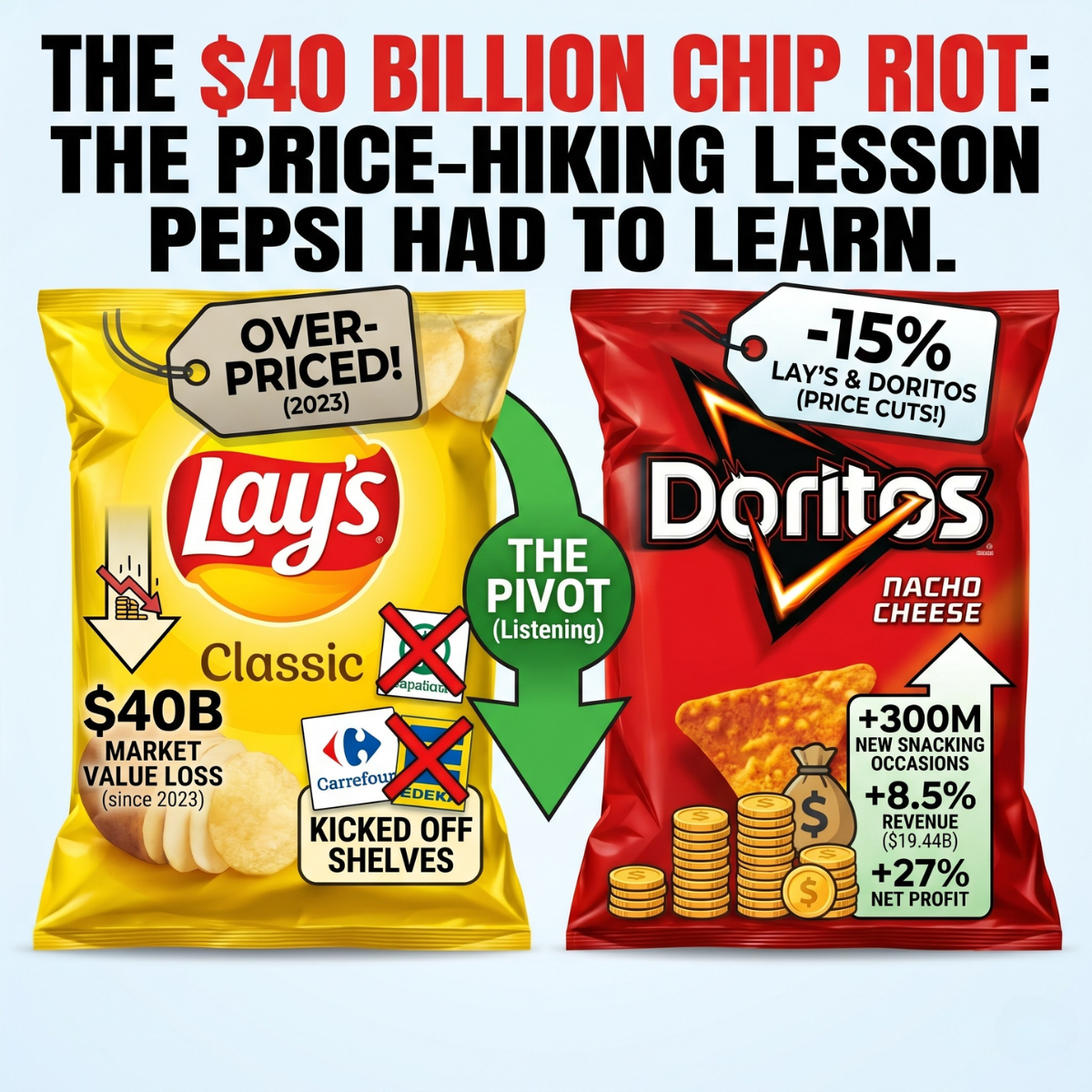
Shoppers pushed back. In Europe, 58% of people expect food prices to keep rising fast in 2026, and in countries like Romania, that fear hits 73%. So, consumers just walked away. They stopped buying the big brands and chose cheap store brands instead. Because of this volume drop, PepsiCo’s market value fell by more than $40 billion since 2023.
My professional opinion is simple. You cannot squeeze a buyer forever. Eventually, the trust breaks. PepsiCo finally realized this and made a massive shift in their strategy for 2026. This article breaks down exactly how they did it, how they beat the competition, and what it means for the retail industry.
The 15% Price Cut and Financial Results
Instead of pushing prices higher, PepsiCo did the exact opposite. Ahead of the Super Bowl – the biggest snacking event of the year – they cut suggested retail prices on flagship brands like Lay’s, Doritos, Cheetos, and Tostitos by up to 15%. At big stores like Walmart, a bag of Doritos dropped from $4.48 to $3.97. They stopped punishing the consumer.
The results are clear and they were fast. Buyers came back to the stores. PepsiCo’s revenue jumped 8.5% to $19.44 billion in the first quarter of 2026. This easily beat the $18.95 billion that Wall Street expected.
Here is a simple look at their Q1 2026 numbers :
| Financial Metric | Q1 2026 | Q1 2025 | Growth |
| Net Revenue | $19.44 billion | $17.91 billion | +8.5% |
| Gross Profit | $10.73 billion | $9.99 billion | +7.4% |
| Operating Profit | $3.21 billion | $2.58 billion | +24.4% |
| Net Income | $2.33 billion | $1.84 billion | +26.9% |
The food volume in North America grew by 2%. This is massive because it is the first time volume grew in over two years. They took a hit on the unit price, but they won the volume game.
The Activist Push: Elliott Management
Big companies do not usually drop prices just to be nice. They are forced to do it. Last year, an activist investor group called Elliott Investment Management bought a $4 billion stake in PepsiCo.
Elliott saw that PepsiCo’s stock was losing to Coca-Cola. They demanded a complete review of the business. They told PepsiCo to aggressively cut costs, fix the supply chain, and make products affordable again. Marc Steinberg, a partner at Elliott, publicly supported this new plan to invest in lower prices and aggressive cost-cutting to drive long-term profit.
Margin Protection: How Did They Afford the Cuts?
If you drop prices by 15%, your profits should drop too. But PepsiCo’s operating profit actually grew by 24.4%. How is this possible?
In my experience running retail operations, you have to fund your discounts from the inside. PepsiCo did this through ruthless cost-cutting. They reduced their U.S. product lineup by nearly 20%. They stopped making the small, weird flavors that do not sell well. They also made the tough choice to close some older Frito-Lay production factories and lay off staff.
By making fewer items in newer, faster factories, their internal costs went down. In fact, the total operating cost for the North America Foods division actually decreased in Q1. This gave them the cash needed to drop prices for the consumer without destroying their own profit margin.
Supermarkets Fight Back
Retailers also fought back against high prices. I saw this firsthand in the European market. Carrefour, a massive supermarket chain, actually kicked PepsiCo products out of their stores in France, Italy, Spain, and Belgium. They put up signs telling shoppers the prices were unacceptable.
Now, the brands are back on the shelves because they finally reached a deal. The supermarket price war is getting real across the world. Tesco and Morrisons in the UK just cut prices on thousands of items to help shoppers. Tesco reduced prices on 3,000 branded items, and Morrisons cut prices on 2,500 products including fresh food and cupboard staples. If brands do not play fair, supermarkets will just push their own cheap private labels.
What the Competition is Doing
To really understand PepsiCo’s win, we must look at their rivals. They all have different strategies in 2026.
Mondelez (The Maker of Oreo and Cadbury): Mondelez faced a huge problem: the price of cocoa hit a 50-year record high. Because their raw materials were so expensive, they refused to drop prices like PepsiCo did. They kept prices high to protect their margins. What happened? Their sales volume dropped 4.8%. People just bought less chocolate. To fix this, Mondelez is now trying “price-pack architecture.” This means they are creating new, smaller “fresh stacks” targeted at the under-$3 price point to keep cash-strapped shoppers buying.
Coca-Cola: Coca-Cola plays a different game. They focus mostly on drinks and operate an “asset-light” model. Years ago, they sold off their delivery trucks and bottling factories. Because they do not own the heavy infrastructure, their operating costs are very low and their profit margins are high. They were able to raise prices and keep their profit margin safe. But PepsiCo sells both snacks and drinks. They rely on heavy volume. They need people buying chips every single day to fill their massive delivery trucks.
Keurig Dr Pepper (KDP): KDP is making big moves in the energy and health drink space. Their sales surged 10.5% recently. They are using their distribution network to partner with fast-growing brands like C4 Energy and Electrolit, and they recently acquired the GHOST energy brand. The GHOST acquisition alone added 3.6% to their volume growth.
War and the Global Supply Chain
Right now, the world is messy. The conflict in Iran resulted in the closure of the Strait of Hormuz. This is a massive problem because about 20% of the world’s oil and natural gas travels through this narrow waterway.
When oil goes up, everything goes up. Transportation costs rise, and maritime insurance becomes very expensive. Plastics and packaging, which are made from oil, also skyrocket. In China, the cost of plastics and packaging jumped more than 25% almost overnight due to the conflict.
So how did PepsiCo survive this? They were ready. PepsiCo buys their packaging and raw materials 9 to 12 months in advance. This strategy is called hedging. It protected them from the sudden 25% price spike. Because they controlled their internal costs, they could proceed with their summer marketing programs and keep prices low for the consumer while competitors panicked.
Clean Ingredients and Health Trends
The consumer is changing. The rise of GLP-1 weight-loss drugs (like Ozempic) means people are eating less junk food. People want healthier food today. They do not want fake ingredients or weird chemicals.
PepsiCo launched new products to match this trend. They released Cheetos NKD and Doritos NKD. These snacks are made entirely without artificial colors or flavors. They also launched Doritos Protein and Smartfood FiberPop. This is incredibly smart because data shows 60% of global shoppers look for protein in their snacks, and 55% want fiber.
In the beverage division, PepsiCo’s 9% revenue growth was heavily boosted by healthy drinks. They successfully integrated Alani Nu and the gut-health soda Poppi into their delivery trucks, adding 7 percentage points to their beverage net revenue growth. This brings a new, health-conscious buyer into the store.
Sustainability: A Realistic Approach
In retail today, ESG (Environmental, Social, and Governance) is important, but it is expensive. Going green costs money.
PepsiCo realized they were trying to move too fast. CEO Ramon Laguarta spoke at the World Economic Forum in Davos and said the debate is really about long-term growth versus short-term costs. In a very honest move, PepsiCo extended their deadline to reach net-zero emissions from the year 2040 to 2050. They also reset their baseline tracking year from 2015 to 2022 to be more realistic about their current massive size. They are still focused on sustainability – like turning old carpets into recycled bottles – but they are doing it at a pace that protects their business and satisfies investors.
Cash Flow and Rewarding Shareholders
At the end of the day, a business must generate cash. Despite cutting prices and facing a global supply chain crisis, PepsiCo is a cash machine.
They expect a free cash flow conversion ratio of at least 80% for 2026. This means they are turning their profits into real, usable cash very efficiently. Because they have this cash, they promised to return $8.9 billion to their shareholders this year. This includes $1 billion in stock buybacks and $7.9 billion in cash dividends.
Even better, they announced a 4% increase in their dividend payout. This is the 54th year in a row they have raised their dividend. In the consumer staples sector, that kind of reliability is exactly what investors want.
Final Thoughts
In retail, you must respect the human budget. PepsiCo took a major risk in 2026. Instead of following the pack and raising prices during a supply chain crisis, they restructured their entire company, cut their own internal costs, and gave the buyer a break.
The buyer rewarded them with 300 million new purchases. They proved that if you offer fair value, clean ingredients, and respect the consumer’s wallet, you can grow your volume and your profits at the same time.
What do you guys think? Are you seeing these lower prices and new healthy snacks in your local store? Let me know below.
Related posts:
 The Supermarket Grocerant Trend: Why Retailers Are Stealing Restaurant Profits
 The €3.90 Gourmet Threat: How Supermarket Meal Kits are Disrupting Fast Casual Dining
 European Retail Self Checkout Shrinkage 2026: 22% Loss
 GLP-1 Retail Impact: How Weight-Loss Drugs Are Shrinking Supermarket Sales
 Tesco and Football championship
 The Billion-Dollar Illusion: How a Fake Movie Parade Transformed Global Retail and Tourism