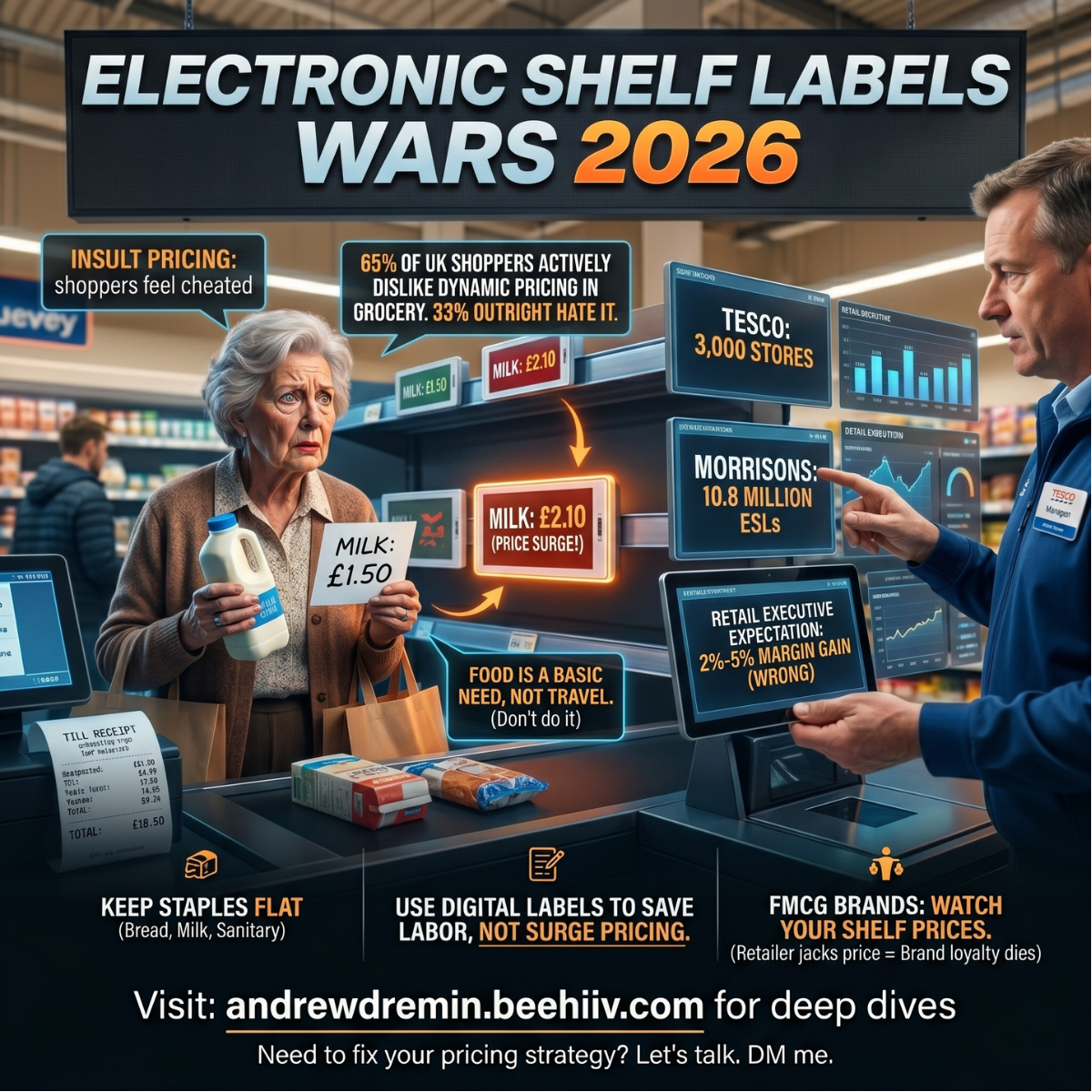
65% of UK shoppers actively dislike dynamic pricing in grocery. 33% outright hate it.
Yet, supermarkets are spending millions on Electronic Shelf Labels (ESLs). Tesco is rolling them out across 3,000 stores. Morrisons is installing 10.8 million digital tags across its entire estate.
Internal business cases often project a 2% to 5% margin gain by unlocking real-time operational flexibility and price optimization. But if retailers use this technology to introduce intra-day surge pricing, it is a massive trap.
The retail clients asked me: “Should we use these screens to change prices during the day?” My answer was simple: Don’t do it.
In travel or ticketing, people accept dynamic pricing. You buy a flight early, you get a deal. But food is a basic need. If a shopper sees the price of milk or bread tick upward while they are walking to the till, they feel cheated. It is “insult pricing,” and the damage to the brand is permanent.
The issue isn’t just algorithmic pricing; it is the broader collapse of consumer trust at the shelf edge.
A recent deep dive by the UK Competition and Markets Authority (CMA) into 50,000 products found that 92% of loyalty tier prices offer genuine savings.
Yet, the same report revealed that 55% of consumers still believe supermarkets artificially inflate regular prices to make the discounts look better. Consumers do not trust the math.
When you layer technology hurdles on top of this existing distrust, the friction becomes visible. Last week, I saw an elderly lady at a checkout charged for a premium toothpaste because she did not have a smartphone to access the app-only member price. That is not a loyalty strategy. That is a penalty for being un-digitized.
If supermarkets mix unpredictable, real-time price changes with an already confusing dual-pricing system, the backlash will be severe.
My advice for retailers and FMCG brands:
Keep staples flat. Keep bread, milk, and sanitary products at stable, predictable prices.
Deploy ESLs for labor, not surge. Use the digital shelf edge to eliminate manual paper swapping, track stock gaps, and automate expiry markdowns. Keep the base price predictable.
FMCG brands, monitor your shelf velocity. If a retailer inflates your baseline shelf price dynamically to test elasticity, your brand loyalty dies, not theirs.
What your pricing strategy after implementing ESL: to gain margin or to keep the trust?
Electronic shelf labels wars
65% of UK shoppers actively dislike dynamic pricing in grocery. 33% outright hate it.Yet, supermarkets are spending millions on Electronic Shelf Labels (ESLs). Tesco is rolling them out across 3,000…


Leave a Reply