
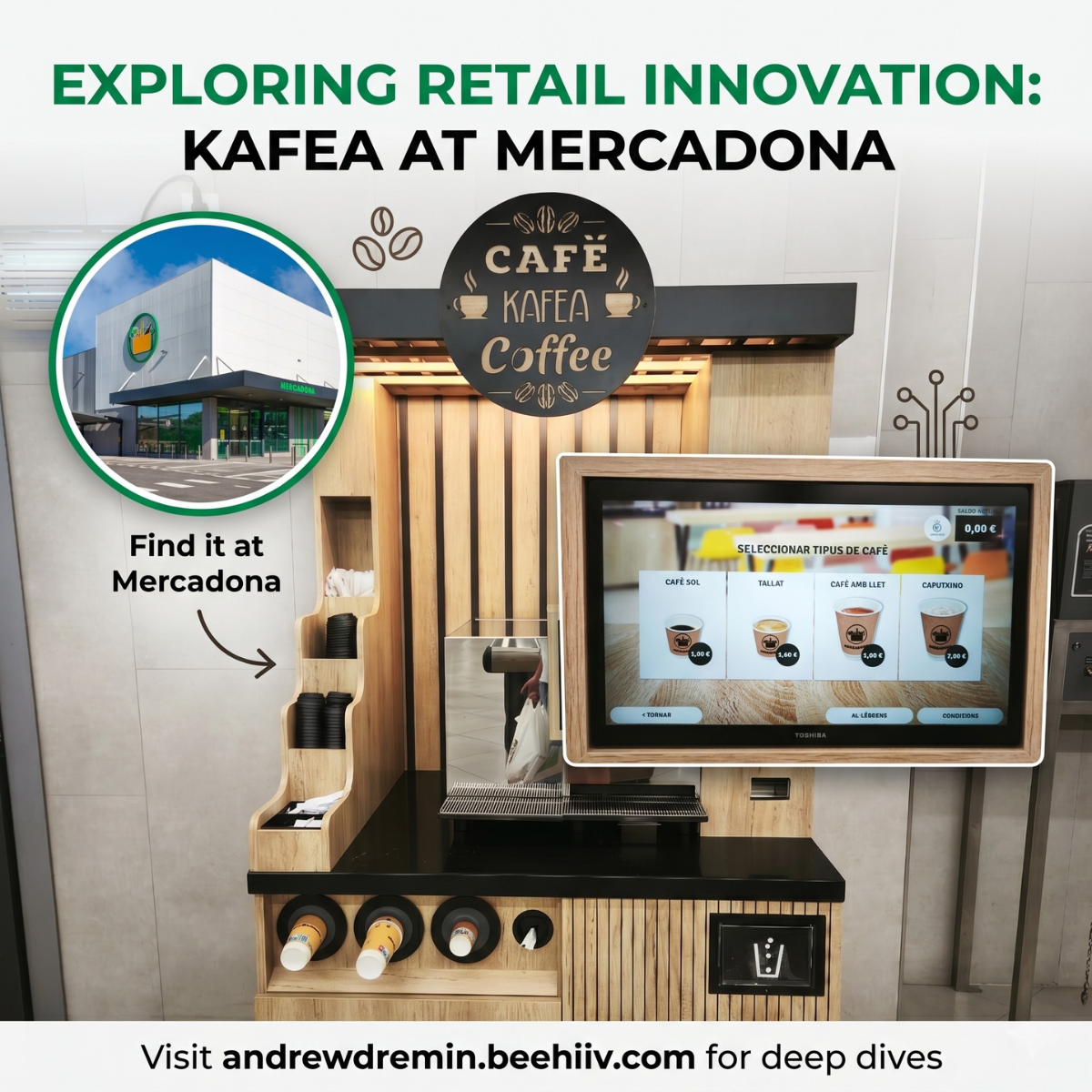
€3 billion. That is how much Mercadona makes selling prepared food in Spain. They now sell more ready-to-eat meals and coffee than McDonald’s and Burger King combined in the Spanish market. These numbers perfectly illustrate the dramatic Spain supermarket food service trends 2026 is expected to bring.
For decades, local bar owners in Spain survived on the morning routine: a quick coffee and a croissant. Today, those same regular customers walk past the neighborhood cafe and enter a supermarket instead.
The reason comes down to price and convenience. At Mercadona, a customer taps a card on a self-serve screen and gets a fresh espresso for €1.30. In a traditional Spanish cafe, that same coffee costs around €2.30. A €1.00 difference every morning adds up to over €300 a year for a customer. Hospitality associations call this unfair competition, but consumers look at their daily budgets.
Why Supermarkets Are Winning the Food War
In a standard supermarket, profit margins on packaged groceries are low—often between 2% and 4%. Prepared food and self-serve coffee operate on completely different economics.
A self-serve coffee machine requires no barista. Once installed, it only consumes beans, milk, water, and electricity. The gross markup on a cup of coffee routinely exceeds 200%.
Traditional Cafe vs. Supermarket Ready-to-Eat
- Labor Costs: Cafes pay staff to take orders, brew coffee, and clean tables. Supermarkets automate ordering and cleanup.
- Real Estate Efficiency: Cafes pay high rent per seat. Supermarkets turn unused floor space into dining zones without buying new property.
- Customer Traffic: Supermarkets already have thousands of daily visitors. Converting a grocery shopper into a lunch buyer costs almost nothing in marketing.
When a retailer converts a few square meters into a self-serve hot meal and drink station, every shopper becomes a potential high-margin customer.
Global Case Studies: Supermarkets as Restaurants
This shift is happening across global retail markets.
Spain: Mercadona “Listo para Comer”
Mercadona built dedicated sections called “Listo para Comer” (Ready to Eat) across thousands of stores. They added microwave counters, cutlery stands, and indoor seating. Customers buy a hot plate of pasta or paella for €4 or €5, grab a cheap espresso, and eat inside the store.
United States: Wegmans
Wegmans Food Markets began replacing manual coffee bars with automated high-end beverage machines. Rising labor costs in the US forced supermarkets to automate drink production while keeping high profit margins.
United Kingdom: Tesco
Tesco placed Costa Express machines in thousands of Tesco Express convenience stores. They turned simple grocery visits into daily morning coffee stops, taking direct market share away from traditional high-street coffee chains.
Netherlands: Albert Heijn
Albert Heijn uses its “AH to go” stores in train stations and city centers as testing grounds. They offer fast self-serve coffee stations and test concepts like “True Pricing,” where environmental and labor costs are calculated into the final price of the cup.
Strategic Framework: Building a Retail Food-to-Go Section
For retailers, adding a food-to-go section is no longer an experiment. It is a core growth driver. A structured approach helps execute it efficiently:
1. Hardware and Loss Prevention
- Integrated Payment Screens: Do not force customers to stand in regular checkout lines for a coffee. Install tap-to-pay terminals directly on the machine interface.
- Automated Dispensing: Program machines to dispense coffee only after the card payment clears. This eliminates unpaid drinks and theft.
2. Space and Operations
- Dedicated Seating: Add durable, easy-to-clean tables and good lighting. Comfortable customers stay longer and buy extra items like snacks or cold drinks.
- Self-Service Stations: Place microwave units, napkins, and trash bins near the seating area so customers manage themselves without store staff intervention.
3. Margin Strategy
- Drive Volume with Food, Profit with Drinks: Keep prepared meal prices low to pull workers in for lunch. Make the primary profit margin on coffee, tea, and bakery add-ons.
Defense Strategy for Cafes and FMCG Brands
The rise of supermarket food sections creates hard choices for independent cafes and packaged food brands.
Traditional Cafes: Do Not Fight on Price
If you own a local cafe, you cannot win a price war against a supermarket chain. They have supply chain scale and automation that small businesses cannot match. Lowering your coffee price to €1.30 will destroy your business margin.
Instead, double down on what automated machines cannot deliver:
- Human Connection: Learn customer names and build community. A machine brews coffee, but it cannot hold a conversation.
- Product Superiority: Serve fresh, specialty-grade coffee beans, local fresh milk, and fresh pastries from local bakeries.
- Atmosphere: Offer a comfortable, unhurried space for meetings, reading, or relaxing away from noisy grocery aisles.
FMCG Brands: Pivot to Ready-to-Eat
Supermarkets are reducing shelf space for traditional packaged brands to expand their own hot food counters. Fast-moving consumer goods (FMCG) manufacturers must adapt by becoming direct suppliers for store deli counters, providing fresh pre-portioned ingredients, or partnering on co-branded grab-and-go stations inside the store.


Leave a Reply