
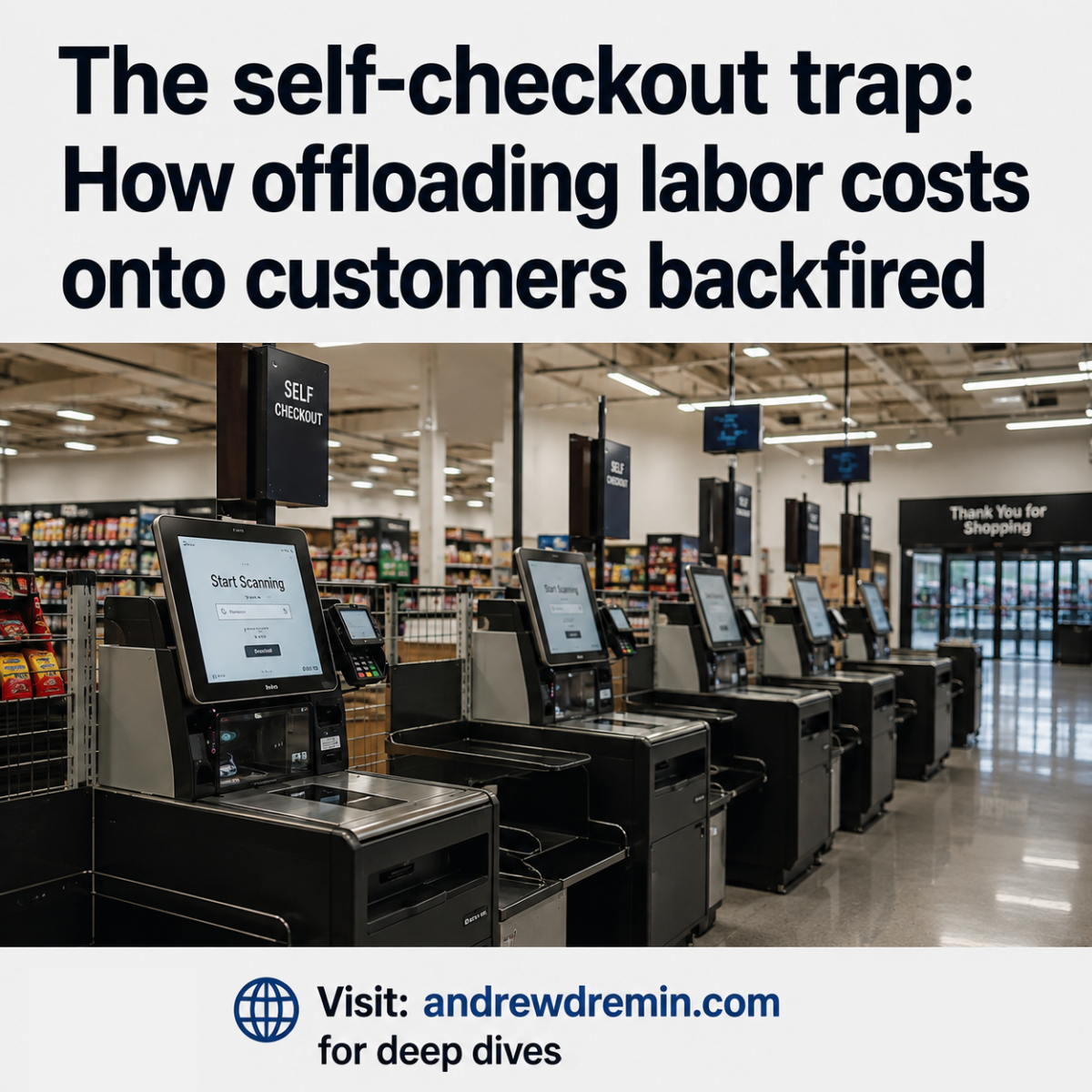
In 2026, 27% of shoppers admit to stealing at self-checkout. Automation did not kill the cashier. It just turned regular customers into angry, unpaid workers – and in many cases, part-time thieves.
We spent a decade trying to eliminate store staff. Now, major retailers are spending millions to bring them back.
The Math Behind the Retail Automation Experiment
Retail chains introduced self-checkout kiosks with one clear goal: cut payroll. If customers scan, weigh, and bag their own groceries, stores need fewer employees on the schedule. But savings on paper quickly turned into losses on the balance sheet.
The Hidden Price of “Free” Labor
A 2026 study from the University of Leicester analyzed €1 trillion in retail turnover across Europe and North America. It showed that while 54% of store transactions now go through automated kiosks, the financial leak is massive. Every single missed scan costs a business an average of €2.50.
When a retailer removes a cashier earning $15 an hour but loses $30 an hour in un-scanned items, broken hardware, and extra security software, no money was saved. The labor cost was simply converted into “shrink”—the industry term for stolen, damaged, or lost inventory.
How Stores Turned Customers Into Suspects
Picture a shopper at a ShopRite store in the United States. The retailer sets a strict 20-item limit on the self-checkout zone. The shopper scans item number 21. The register immediately locks. A red light flashes overhead. The customer stands there waiting for an overworked clerk to walk across the store and scan an override card.
Look around the store during peak hours. The traditional cashier lanes are closed off. The store forces the customer to do the work, but treats them like a suspect while they do it. Friction is built into every step of the process.
The Psychology of “Self-Discounting”
When retailers offloaded work onto customers without offering a clear benefit, customers created their own incentive. Many shoppers do not see missing an item as a crime. They view it as a discount for doing the store’s job.
Self-checkout theft usually falls into three categories:
- Item swapping: Scanning an expensive organic product under the code of a cheap item, like yellow bananas.
- Accidental miss: Leaving items in the bottom of the shopping cart because the hand scanner failed to register.
- Frustration theft: Walking away with items after the register freezes or demands an employee verification for the third time.
Bad software and hostile store policies transformed ordinary people into casual shoplifters.
The Market Correction: Retailers Step Back
The market is correcting itself because the operational math no longer works. Major chains across different sectors are dialing back self-checkout.
Major Chain Case Studies
- Dollar General: The CEO publicly admitted the business relied too heavily on automation. The company is completely removing kiosks from hundreds of locations and putting human cashiers back in control in thousands of stores.
- Booths: The UK supermarket chain removed self-checkout machines from 26 out of its 27 stores. The main drivers were customer complaints regarding slow error resolutions and a cold store environment.
- Target and Walmart: Both companies are restricting kiosk access. Target introduced 10-item limits for self-checkout lanes nationwide. Walmart has closed self-checkout lanes during off-peak hours and removed kiosks entirely in locations with high theft rates.
Government Interventions
Lawmakers are now regulating store staffing. Rhode Island passed a state law mandating at least one human cashier for every three self-checkout kiosks. Similar legislation is being reviewed in other states to protect retail jobs and reduce customer conflict on the store floor.
The Impact on FMCG Brands and Impulse Sales
The self-checkout failure extends beyond store operations. It directly damages fast-moving consumer goods (FMCG) manufacturers.
The traditional cashier lane was historically the most profitable real estate in a grocery store. It drove high-margin impulse purchases for products like candy, chewing gum, cold beverages, and batteries.
When shoppers use self-checkout, front-of-store sales decline for three reasons:
- Divided attention: The shopper must focus on scanning, checking prices, and bagging, leaving no time to browse items nearby.
- Occupied hands: The customer is holding items, bags, or payment cards, making it harder to pick up extra products.
- Stressful environment: Shoppers want to resolve technical prompts and exit the store quickly, avoiding any extra delay.
When the checkout area becomes a stressful bottleneck, FMCG brands lose their best conversion point in the physical store.
Practical Lessons for Retail Leadership
If you run retail operations or sell products through retail channels, the outcome of the self-checkout rollout offers clear lessons.
- Pure automation is a myth: You cannot replace store staff with machines and expect zero operational issues. Technology needs human oversight to handle edge cases and barcode errors.
- Friction destroys customer loyalty: Treating honest customers like shoplifters destroys trust. Once a customer has a negative experience at checkout, they switch to competitors or shop online.
- Labor costs are unavoidable: If you cut payroll at the register, you pay that same money back in theft, security guards, camera subscriptions, and lost customer lifetime value.
Retailers need to stop building systems that make buying products harder. Stores must fix customer service on the retail floor before investing in more register hardware.
Related posts:
 Tesco and Football championship
 Europe FMCG Market Trends 2026: Danone vs Private Label
 The Small Appetites Economy: How Weight-Loss Drugs Are Rewriting the Rules of Retail
 The €3.90 Gourmet Threat: How Supermarket Meal Kits are Disrupting Fast Casual Dining
 EU international trade 1Q 2026
 Why Tesco is Walking Away from Central Europe and What Retail Leaders Must Learn
Leave a Reply