
The Numbers Behind the Decline
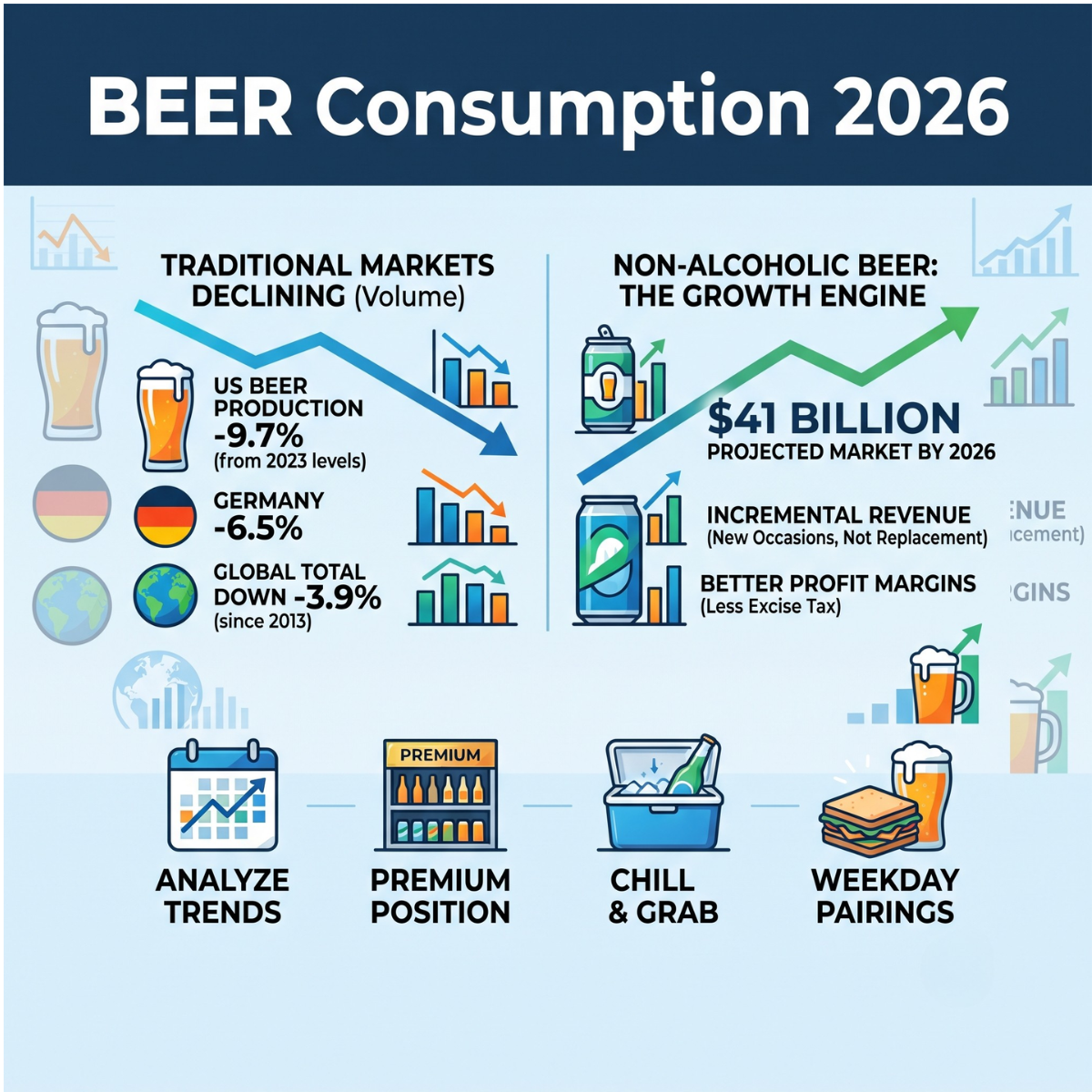
Recent industry reports show a noticeable drop in beer production across major Western markets:
- United States: Beer output fell 9.7% from 2023 levels.
- Germany: Production dropped by 6.5%.
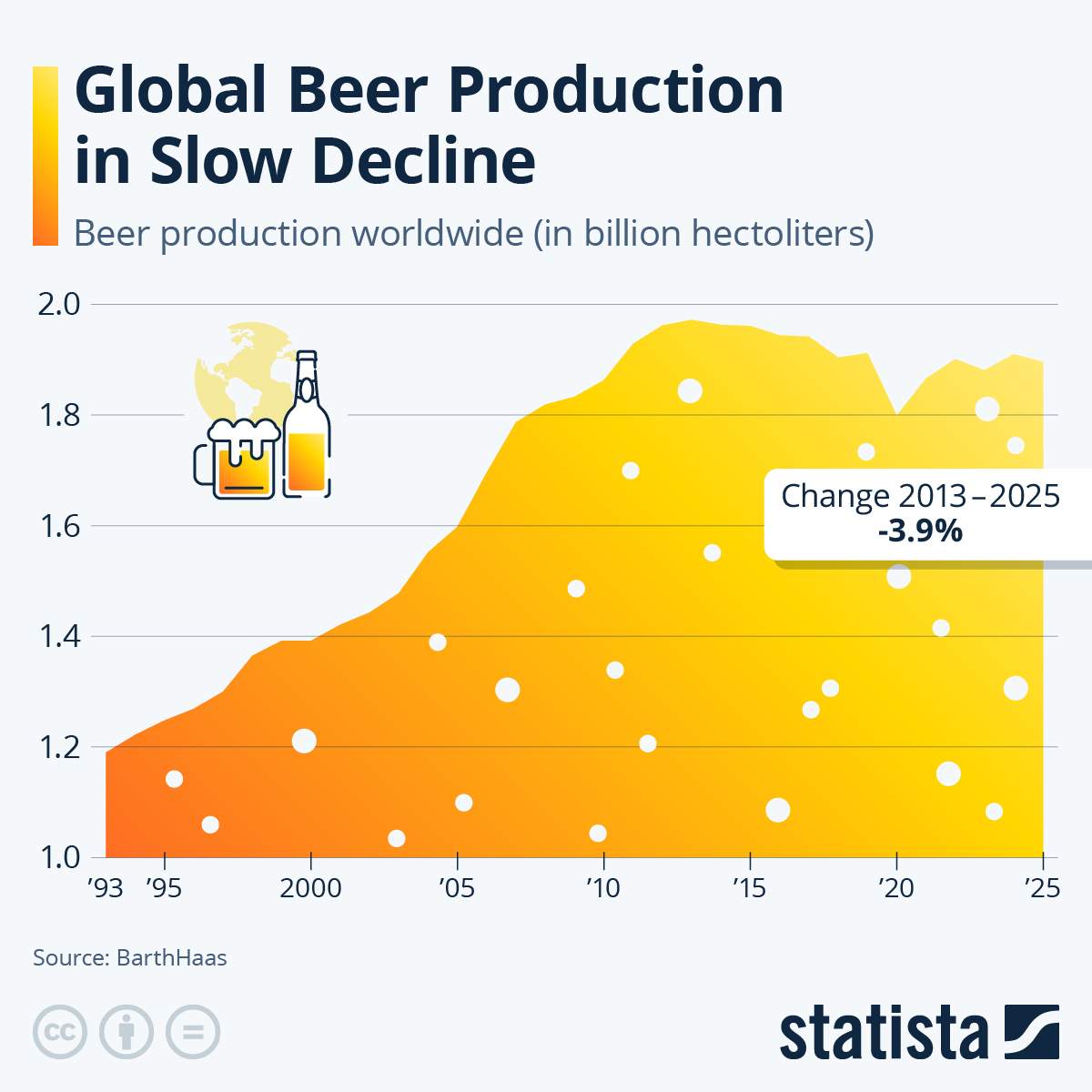
- Global total: Worldwide beer production is down 3.9% since 2013.
Many market analysts look at these numbers and claim that traditional beer is dying. They see younger consumers drinking less alcohol and conclude that the entire category is facing an irreversible collapse. However, this conclusion is too simple.
 You will find more infographics at Statista
 You will find more infographics at Statista
 You will find more infographics at Statista
 You will find more infographics at Statista
Regional Differences: Mature vs. Emerging Markets
The global picture is not uniform. While traditional markets in Western Europe and North America are slowing down, developing regions are seeing high growth:
- Vietnam: Local production surged by 32.8%. Rising incomes, a growing urban workforce, and warm weather drive strong daily demand.
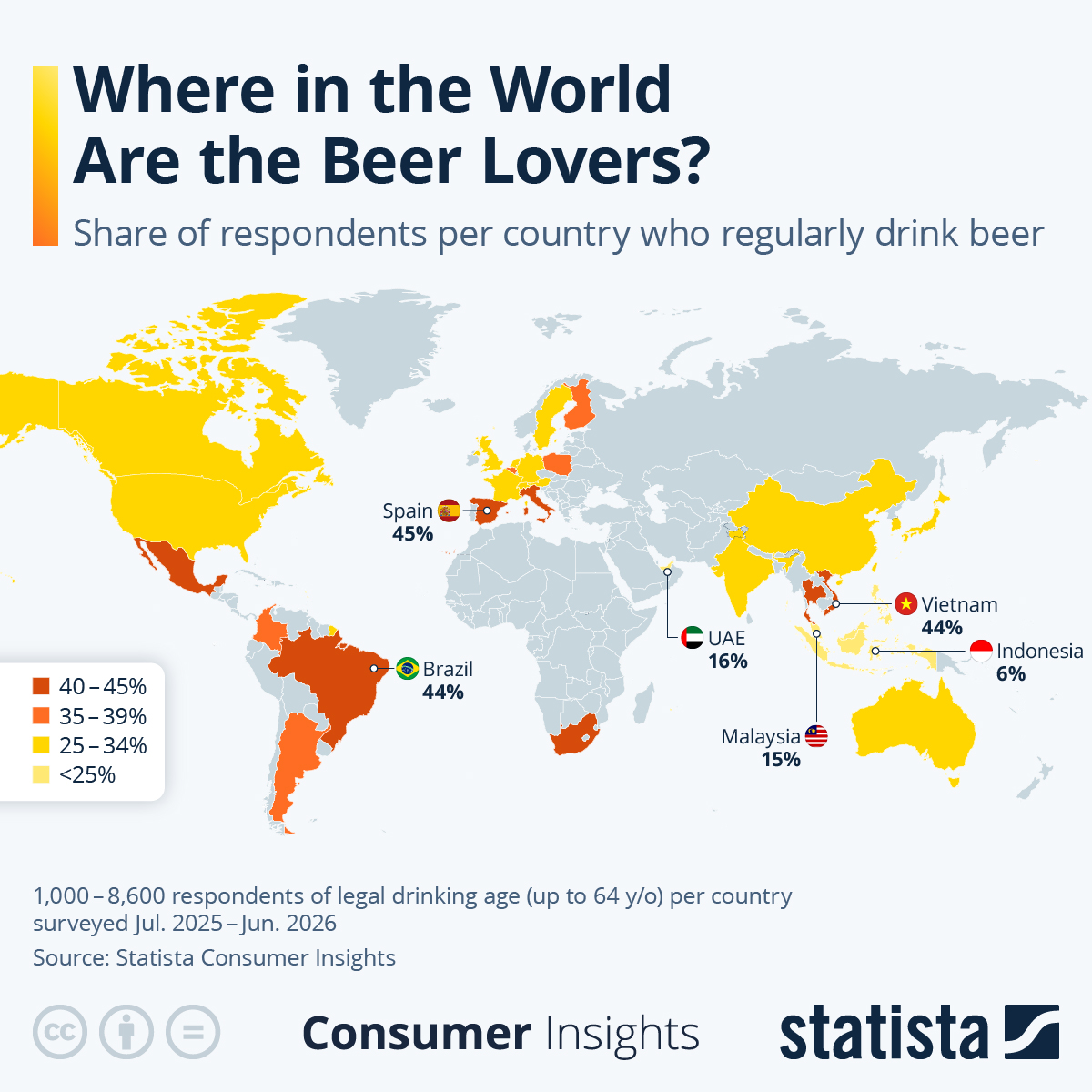
- Latin America: Countries like Brazil maintain high consumption rates, where 44% of adults report drinking beer regularly.
- Southern Europe: In Spain, 45% of consumers regularly purchase and drink beer.
The overall market is not disappearing. Instead, production and consumption patterns are moving from mature markets to emerging regions.
Understanding the Market Fracture
Traditional Beer Remains Dominant
Despite reports of declining volume, standard beer with alcohol still holds roughly 94% of the global market share. It remains a massive, highly profitable category for manufacturers and retailers alike. The industry is not collapsing; it is fracturing into smaller, more specific segments.
Shifting Occasions and Modern Routines
The main driver of this shift is how consumer schedules have changed. People still enjoy the taste and social aspect of beer, but modern work hours and health awareness limit when they can drink alcohol.
- Workday limits: A logistics worker, delivery driver, or office employee cannot drink a heavy alcohol lager during a Tuesday lunch break.
- Health choices: More consumers are tracking their calories, improving their sleep quality, and managing fitness routines.
- Driving regulations: Stricter enforcement of traffic laws worldwide deters alcohol consumption during quick social visits or weekday dinners.
Consumers want the ritual of having a beer with a meal, but they cannot afford the physical or mental side effects of alcohol during a busy workday.
The Non-Alcoholic Beer Expansion
A $41 Billion Market by 2026
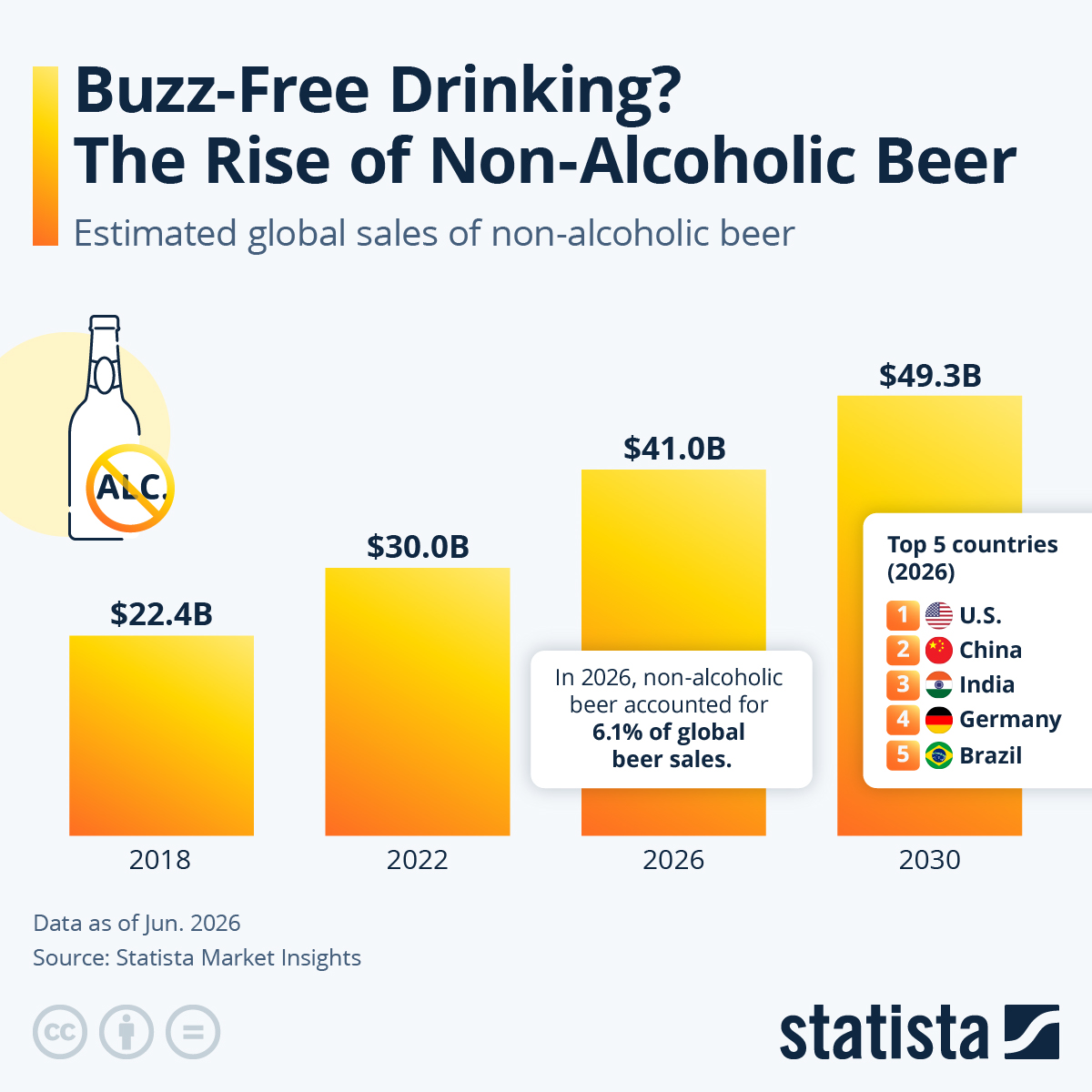
The non-alcoholic beer segment is directly solving this problem. Industry forecasts project that the global non-alcoholic beer market will reach $41.0 billion in 2026.
This is not replacement volume; it represents incremental revenue. When a consumer buys a non-alcoholic beer at midday, they are not replacing a regular beer they would have drunk at night. They are replacing water, soda, or iced tea.
Why Non-Alcoholic Beer Generates New Profit
For retailers and brands, zero-alcohol beer offers specific financial advantages:
- Better margins: In many regions, non-alcoholic beverages are not subject to heavy alcohol excise taxes. This allows producers and retailers to maintain higher profit margins per unit.
- New consumption times: Zero-alcohol products extend drinking occasions to weekday lunches, post-workout recovery, afternoon office breaks, and designated driving nights.
- Broader audience: These products appeal to pregnant women, health-conscious buyers, athletes, and individuals who abstain from alcohol for religious or personal reasons.
Actionable Retail Strategy for Category Managers
To capture this shift, store managers and FMCG (Fast-Moving Consumer Goods) brands must update how they structure, position, and promote their beverage shelves.
1. Analyze 12-Month Sales Trends
Short-term sales reports often lead to poor inventory decisions.
- The mistake: Looking at a 90-day winter report, seeing low beer volume, and reducing overall category shelf space.
- The fix: Look at rolling 12-month data to account for seasonal swings. Identify permanent underperforming SKUs (Stock Keeping Units) that fail all year, cut those specific items, and protect space for stable core products.
2. Position Non-Alcoholic Beer as Premium
Where you put the product on the shelf changes how customers perceive its value.
- The mistake: Placing non-alcoholic beer on the bottom shelf next to low-cost budget drinks or hiding it in a small health food aisle.
- The fix: Place non-alcoholic options on main beer shelves at eye level, directly next to premium craft beers and imported brands. Buyers of non-alcoholic beer are usually looking for quality and are willing to pay standard premium prices.
3. Allocate Refrigeration Space for Immediate Consumption
Temperature dictates purchase decisions for daytime drinks.
- The logic: Consumers buy non-alcoholic beer for immediate consumption—during lunch, right after work, or on the drive home.
- The fix: Move a portion of zero-alcohol inventory into front-of-store coolers and refrigerated display cases. A room-temperature non-alcoholic beer on a dry shelf will not sell to a worker buying a quick lunch.
4. Redesign Promotions for Weekday Routines
Marketing strategies must match modern lifestyle habits.
- The mistake: Bundling non-alcoholic beer only into weekend party packs or summer BBQ discounts.
- The fix: Create weekday cross-promotions. Bundle non-alcoholic beers with lunchtime meals (for example, a sandwich, chips, and zero-alcohol beer combo) from Monday through Thursday.
Adapting to Market Maturity
The global beer industry is not dying; it is adapting to new consumer habits. Total drinking volume in Western countries is stabilizing, but sales value is moving toward functional, lower-alcohol, and zero-proof alternatives.
If your beverage category sales are flat, the issue is rarely a lack of consumer demand. More often, it is an outdated shelf layout, poor refrigeration planning, or incorrect promotional timing.
Related posts:
 World GDP Share 1820 to 2025: The Economic Transition
 The Billion-Dollar Illusion: How a Fake Movie Parade Transformed Global Retail and Tourism
 European Retail Self Checkout Shrinkage 2026: 22% Loss
 The battle for US grocery market.
 Why Nestlé Sold 50% of Its Water Business
 Why Mercadona’s 27.4% Market Share Is Misleading
Leave a Reply