
Dubai Duty Free just reported $2.37 billion in sales. That is a massive number. People see this figure and make assumptions. They assume physical retail in airports is completely healthy and growing naturally. But look closer at the reality on the ground. Behind that huge number is a highly stressed traveler.
Watch him arrive at the airport. He is worried about traffic. He stands in a long, slow line for security checks. He has to take his laptop out of his bag. He has to take off his shoes and belt. By the time he passes security, his brain is tired. What does he do? He checks his phone to find his departure gate. He walks very fast. He walks right past the physical store shelves. The bright lights and large displays do not register in his mind. He just wants to find his gate and sit down. Physical shelves are often invisible to a stressed man.
Global Mobility and The Data Boom
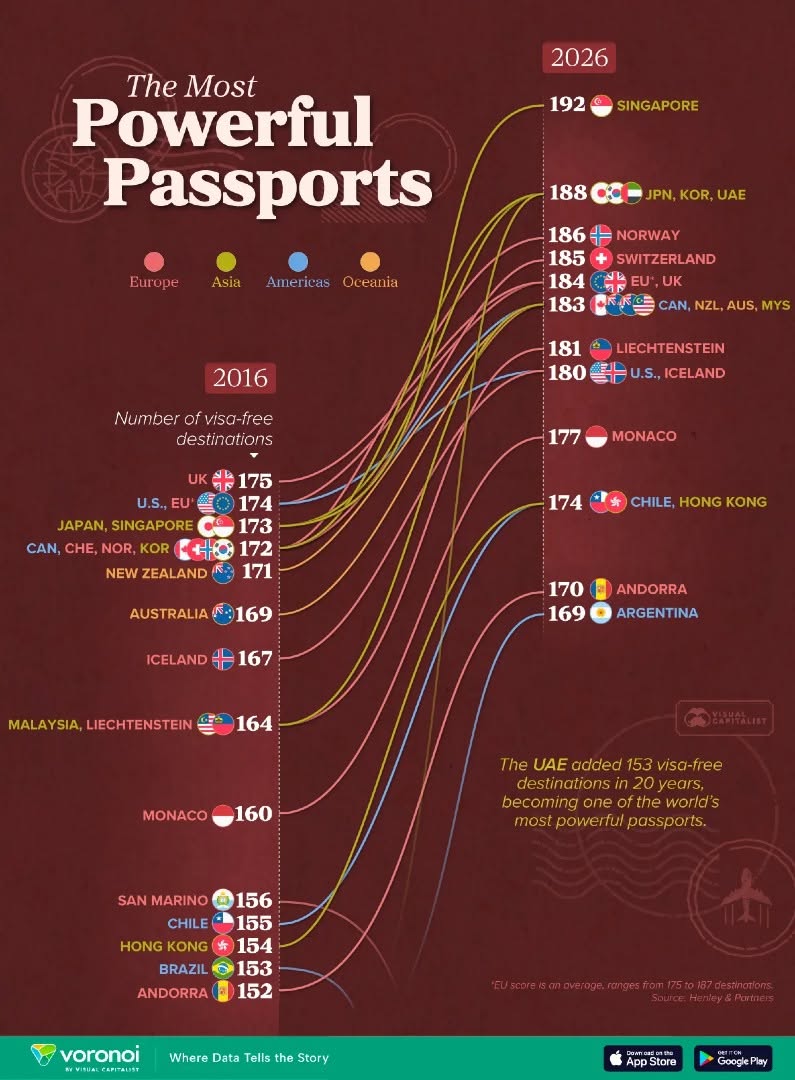
Look at the attached chart from Visual Capitalist. It shows a clear fact. The UAE passport added 153 visa-free destinations in just 20 years. This is not just a local event. Global mobility is growing fast all over the world. More borders are opening. More people have the ability to travel.
This means much more passenger traffic. Different types of people are traveling now. It is no longer just wealthy business people. With all these new travelers comes a massive amount of new data. Every time a person buys a ticket, scans a passport, or connects to the airport Wi-Fi, they create data. We have more information about traveler movements than ever before.
Why The Old Retail Model Is Dead
But here is the main problem. Many Fast-Moving Consumer Goods (FMCG) brands do not test their assumptions. They still think airport retail is just about catching a bored passenger. They imagine a man with two hours of free time, staring slowly at a premium chocolate display.
That model is outdated. The passenger is not bored. He is anxious. Furthermore, airlines now enforce strict cabin baggage limits. Low-cost carriers charge heavy fees for extra bags. Even standard airlines are getting strict about weight and size. If a traveler buys a large bottle of liquor or a big box of chocolates, he must carry it. He has to fit it under his small seat. Strict baggage rules and airport anxiety kill physical impulse buys. People do not want to carry heavy things for a six-hour flight.
The Shift to Digital Fulfillment
In my 15 years in retail procurement and commercial operations, I see this mistake a lot. A brand sees falling sales in their traditional airport shops. They get frustrated. They usually look at the wrong metric. They look at foot traffic. They see that 10,000 people walked past the shop. They wonder why only 50 people bought something.
They try to fix it by putting up a brighter sign. They try a bigger discount. This is the wrong approach. They are trying to solve a structural problem with basic marketing. They need to shift their focus completely to digital fulfillment. The physical shop is no longer the main point of sale.
Using Real-Time Data to Sell
The global travel retail market is projected to hit $89.4 billion in 2026. The brands taking that revenue do not wait for a man to walk into a shop. They do not rely on physical shelves. Instead, they use real-time flight data.
Let me explain the mechanics. Imagine a long-haul flight to New York is delayed at Gate B for three hours. The traditional retailer does nothing. The smart retailer reacts instantly. They know exactly who is waiting at Gate B. They instantly change their digital ad screens in that specific terminal. They match the digital screens to the passenger profiles sitting there. If it is a business flight, they show premium electronics. They push targeted deals straight to the passengers’ phones.
The Pre-Order Revolution
Look at major hubs like Heathrow in London or Incheon in South Korea. They do not force people to browse shelves. They push digital pre-order apps.
The process is simple and logical. A traveler is sitting in a taxi on his way to the airport. He buys premium goods on his phone in the car. He pays digitally. When he arrives, he simply goes through security. He walks to his gate. He picks the bag up at a small collection desk near the gate. There is no friction. He avoids carrying heavy bags through the long terminal. He gets what he wants with zero stress.
Action Plan for FMCG and Retailers
Here is my conclusion for retailers and FMCG brands based on the current facts. You must change how you operate.
- Stop relying on physical foot traffic alone. It is a false metric. High foot traffic does not mean high sales if the passengers are stressed and rushing to a gate. Treat foot traffic data as just one small variable, not the whole picture.
- Link your digital promotions to real-time passenger data. Stop guessing. If a flight is going to a cold location, do not show ads for sunglasses on the screens near that gate. Match the product to the exact destination and the exact passenger demographic.
- Build fast pre-order options. Make it easy to buy on a phone before the passenger even arrives at the airport. Provide collection points at the departure gates.
The data is already there. The airlines and airports have it. We just need to stop making assumptions and start using the data correctly.
Infonograpfic Source: Visual Capitalist https://www.visualcapitalist.com/the-worlds-most-powerful-passports-2016-vs-2026/


Leave a Reply